
BMW C1/C1 200 Repair Manual
- RAR
- 59.4Mb
82 manuals
The founder of the modern BMW company, Bayerische Flugzeugwerke, a factory specializing in aircraft manufacturing, was founded in 1916. A year later, the plant is renamed Bayerische Motoren Werke and the famous abbreviation BMW appears.
After World War I, Germany prohibited the production of military aircraft, and in order to stay afloat, BMW switched to the production of cars and motorcycles.
In record time, the legendary boxer motorcycle engine was developed, the main ideas of which are still used today. In 1923, the BMW R32 motorcycle was produced. Its 486 cc engine produces 8.5 hp, which allows the motorcycle to accelerate to almost 100 km / h.
The uniqueness of the BMW R32 engine is that the cylinders in it are located not in the direction of the front and rear wheels, like the vast majority of motorcycles of that time, but across the movement. A cardan shaft connects the rear wheel and gearbox, which is controlled by a friction clutch. Since the cylinders protrude from the overall dimensions of the motorcycle, this serves as additional cooling for the engine. In addition, the motorcycle uses a fully enclosed lubrication cycle.
The BMW R32 motorcycle became the basis for all subsequent models of the company. Even on modern BMW motorcycles with boxer engines, the features of this bike can be recognized.
Developing the ideas of R32, BMW in 1937 sets a speed record on a 500 cc motorcycle, reaching a speed of 279.5 km / h. This result was the best for 14 years.
During World War II, BMW produces motorcycles for the army, improving its pre-war development. After the war, equipment and drawings of the plant are exported to the USSR, and engineers are involved in work in the field of jet engine building.
After the ban on the production of motorcycles was lifted, BMW began almost from scratch - drawings and diagrams were recreated using the preserved technique. The first motorcycles are produced in 1948, and already in 1950 production exceeds 17,000 units per year. The following year, the company launches the first sports motorcycle - the BMW R68 with an engine capacity of 594 cc. In the mid-50s there was a decline in demand for motor vehicles, which led to the closure of several large German companies, but BMW continued its activity, actively exporting motorcycles to other countries.
In the 60s, the company sold its aviation assets and focused on the production of motor vehicles and cars. In the 1980s, BMW introduced the pioneer of the new family - the BMW K100 - a motorcycle with a water-cooled, in-line 4-cylinder engine of 1,000 cc. It was assumed that the new series will replace motorcycles with Boxer engines, but due to the steady demand for the latter, they continue to be produced until now.
In 1988, BMW was the first to introduce an ABS (anti-lock braking system) for motorcycles. Since then, it has become standard for all BMW sports models in the K series.
Currently, BMW produces sportbikes, road and cross-country bikes, as well as touring motorcycles, which are distinguished by advanced technical solutions and high quality.
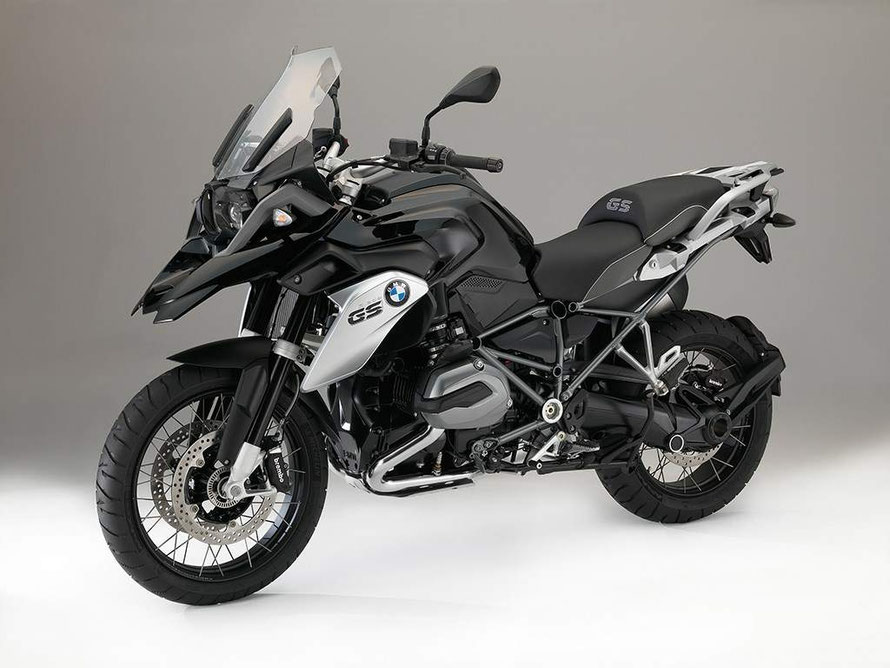 BMW R 1200GS